
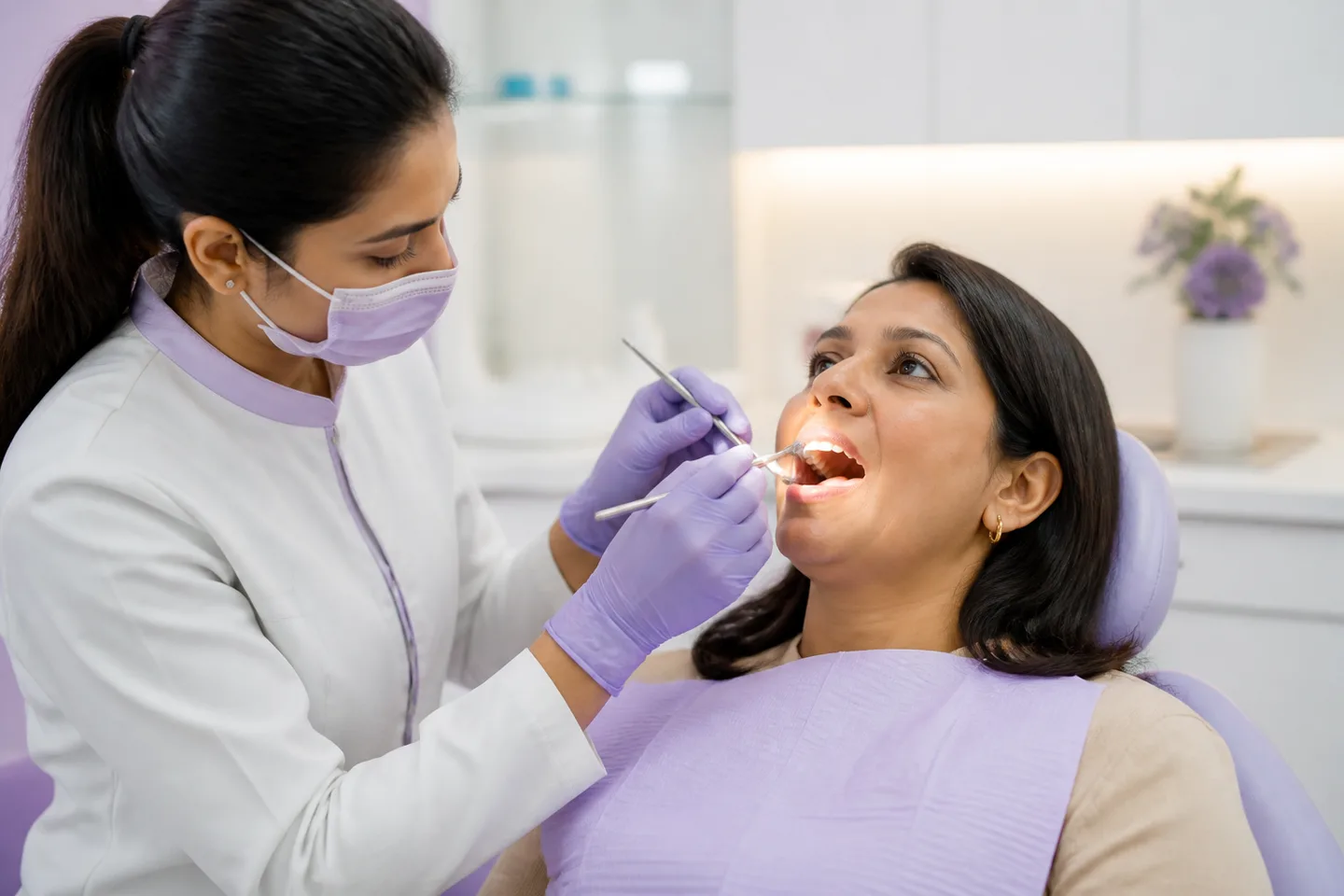
Mouth Ulcer Care — what it actually is
Most mouth ulcers heal within one to two weeks, but repeated ulcers or a sore patch that persists deserve an examination. Causes range from trauma and stress to nutritional or medical conditions.
The aim is to identify triggers, relieve symptoms and recognise the small number of changes that need further investigation.
Signs you may need it
One of these on its own is worth a look. Two or more, and it is worth booking rather than waiting to see whether it settles.
- An ulcer lasting longer than two weeks
- Ulcers that keep returning
- A sharp tooth or denture rubbing the same area
- A red, white, firm or unexplained patch
How it is done here
The area, nearby teeth and possible triggers are examined. Irritating edges can often be corrected and symptom relief advised. Persistent, unusual or widespread changes are referred promptly for specialist assessment.
What to expect, step by step
These are genuinely sequential — each step depends on the one before it, which is why some treatments cannot be finished in a single visit.
- 01
History
Timing, recurrence, medication and possible triggers are reviewed.
- 02
Examine
The ulcer and surrounding mouth are checked carefully.
- 03
Relieve or refer
The cause is addressed where clear, or specialist review is arranged.
Questions patients ask about mouth ulcers
When should I worry about an ulcer?
Book an examination if it has not healed within two weeks, feels firm, is getting larger or keeps returning.
Can a sharp tooth cause an ulcer?
Yes. A broken tooth or rough restoration can repeatedly traumatise the same spot and should be smoothed or repaired.