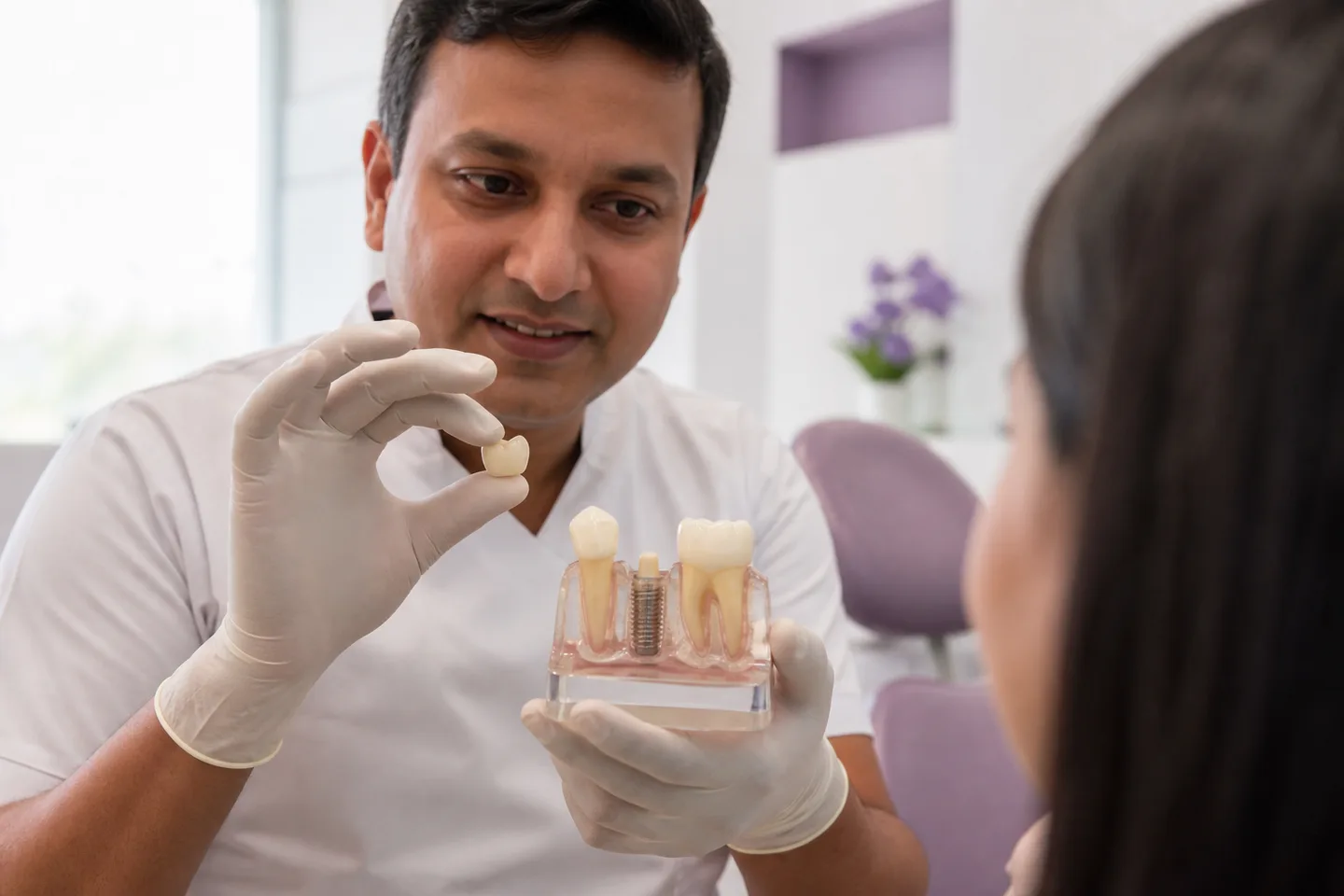

Dental Bridges — what it actually is
A bridge replaces a missing tooth by joining a false tooth to the teeth on either side of the gap. It is fixed in place, so nothing comes out for cleaning, and it stops the neighbouring teeth from tilting into the space and the opposing tooth from drifting down.
It requires the supporting teeth to be prepared, in the same way a crown does. That makes it a straightforward choice when those teeth already need crowning or are heavily filled, and a decision worth thinking about when they are pristine. You will be told which situation you are in.
Signs you may need it
One of these on its own is worth a look. Two or more, and it is worth booking rather than waiting to see whether it settles.
- A gap left by a tooth that has been extracted
- Neighbouring teeth beginning to tilt towards the space
- Food packing into the gap after meals
- Chewing on one side only because the other side has a gap
- A failed old bridge that needs replacing
- A gap at the front that shows when you speak or smile
How it is done here
The teeth either side are prepared under local anaesthetic, an impression is taken and a temporary bridge is fitted so you do not leave with a visible gap. The laboratory makes the bridge over about a week. It is then tried in, checked for fit, bite and shade, and cemented. Before you leave you are shown exactly how to clean underneath the false tooth with a floss threader or interdental brush — that daily minute is what decides how long the bridge lasts.
What to expect, step by step
These are genuinely sequential — each step depends on the one before it, which is why some treatments cannot be finished in a single visit.
- 01
Assessment
Whether the teeth either side can carry a bridge, checked on X-ray as well as by eye.
- 02
Preparation
The supporting teeth are shaped under local anaesthetic.
- 03
Impression and temporary
A precise impression, and a temporary bridge so the gap never shows.
- 04
Laboratory
The bridge is built to your bite and shade. About a week.
- 05
Fit, cement and cleaning
Fitted and cemented, then you are shown how to clean under it properly.
Questions patients ask about bridges
How long does a bridge last?
Ten to fifteen years is a fair expectation with good cleaning. What ends a bridge is almost always decay or gum disease on the supporting teeth, not the bridge breaking — which is why cleaning underneath it matters so much.
How do I clean under a bridge?
With a floss threader or an interdental brush passed underneath the false tooth, once a day. It takes under a minute. You will be shown how on your own bridge, not on a diagram, before you leave.
Do the teeth either side have to be cut down?
Yes — they have to be prepared to carry the bridge, in the same way a tooth is prepared for a crown. That is the honest trade-off, and it is why a bridge makes most sense when those teeth already need crowning.
Can I leave the gap instead?
You can, and for some gaps — particularly a back tooth with nothing behind it — it is a reasonable choice. What you should know is that the teeth around an untreated gap gradually move, which changes the bite and makes replacing it later harder and more expensive.
Will it look natural?
The shade is matched to your own teeth and checked at the try-in. For a front bridge, the shape of the gum under the false tooth is also worked on, because that is what usually gives a bridge away.